Lino, seta ed oroXVII – XX secolo Tra i paramenti conservati nella struttura si riconoscono in particolare i seguenti: Piviali, ampie vesti di forma semicircolare da indossare alla stregua di un grande mantello, aperto...
Scopri di piùLino, seta ed oroXVII – XX secolo Tra i paramenti conservati nella struttura si riconoscono in particolare i seguenti: Piviali, ampie vesti di forma semicircolare da indossare alla stregua di un grande mantello, aperto...
Scopri di piùCroce: argento fuso, cesellato, inciso, cristallo di roccaStauroteca: argento dorato, gemme1634Giovanni Francesco Frangialtezza 57 cm, larghezza 28 cm, diametro base 15 cm L’iscrizione posta alla base ricorda che il cardinale Tiberio Muti, vescovo di...
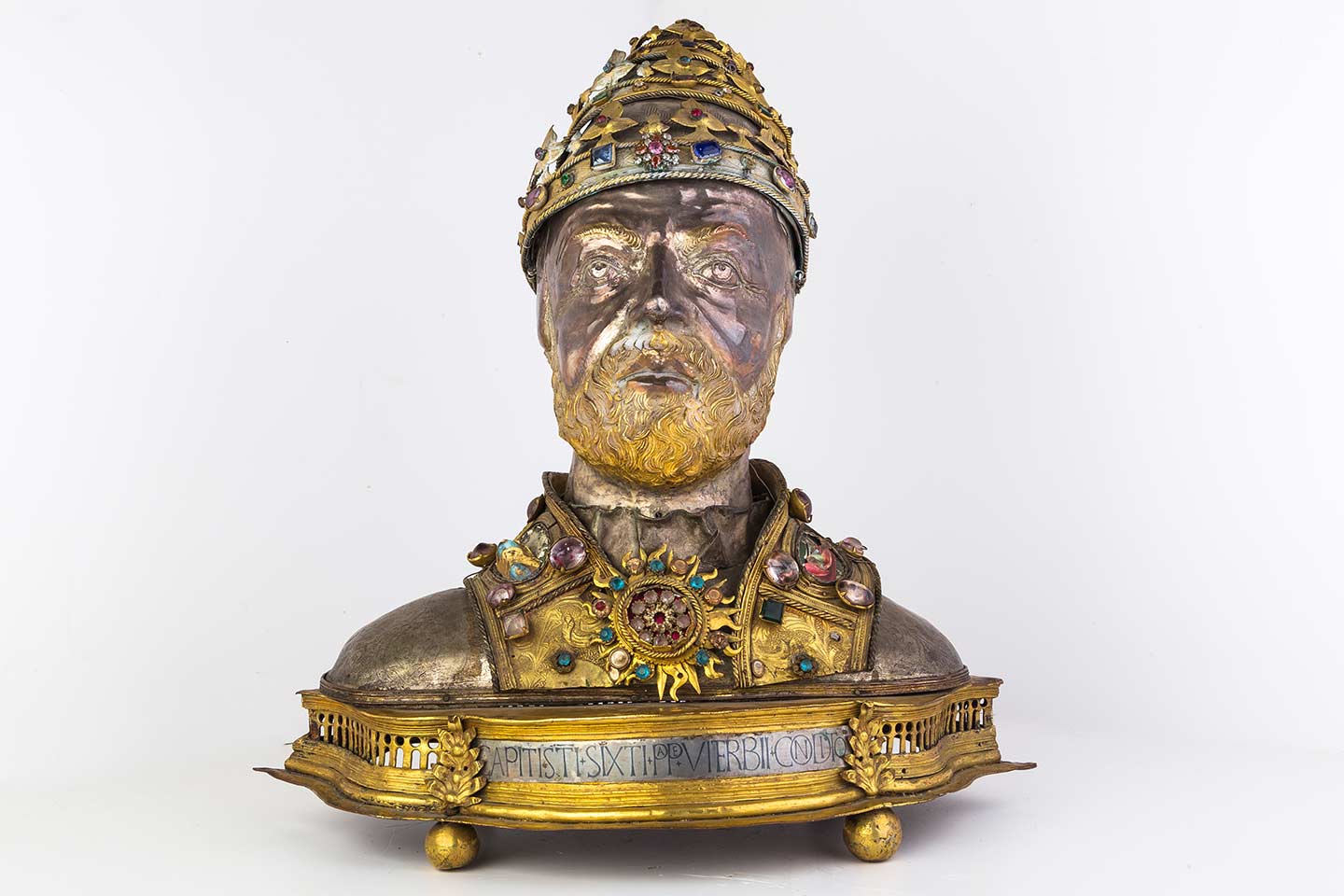
Scopri di piùArgento sbalzato, inciso, cesellato, dorato, rame dorato e gemme1440-1450 d.C.Anonimo argentiere viterbeseAltezza 52 cm, larghezza 50 cm, profondità 30 cm Il busto è il reliquiario di san Sisto II, salito al soglio pontificio nel 257...
Scopri di piùInchiostro su pergamena con miniatureXIII – XV secolocm. 75 x 55 Gli antifonari sono dei libri liturgici usati nella celebrazione di rito cattolico per le ore canoniche che contengono le parti cantate della liturgia,...
Scopri di piùLegno dorato XVII – XVIII secolo All’interno del Museo sono presenti reliquiari in diverse forme e materiali. I più comuni sono quelli realizzati in legno con forma a cassetta più o meno decorata. Altri sono...
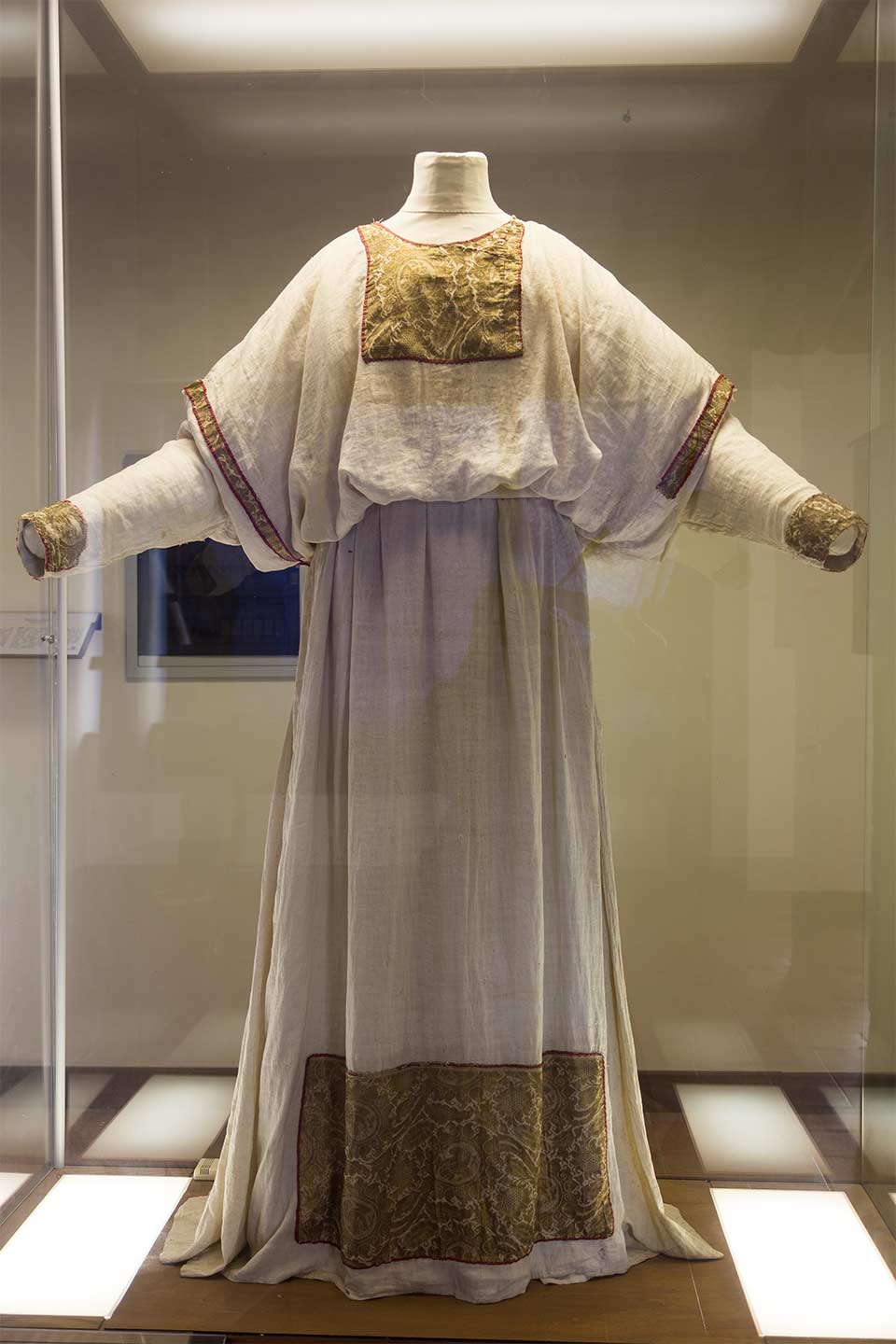
Scopri di piùLino, seta e ricami in oroXII secolo (?) Le vesti di San Bonifacio, tradizionalmente giunte a Viterbo nel 1172 dopo la conquista e distruzione di Ferento, sono composte di quattro elementi: l’alba, la veste liturgica...
Scopri di piùSeta, filati metallici; tessitura a tavolette XIII secolo 191 x 6.5 La tradizione orale lo ritiene appartenere a papa Giovanni XXI, al secolo Pietro Hispano (1210ca-1277). I materiali, la tecnica di esecuzione e i motivi...
Scopri di piùArgento doratoXV secolo Il calice mostra una tipica forma conica molto svasata e, conformemente ai canoni liturgici, la coppa è in argento dorato in quanto doveva contenere il sangue di Cristo.Nella parte centrale del...
Scopri di piùArgento doratoXV secoloDomenico Aloisi Il reliquiario ha una base esagonale di 15 cm che è scandita longitudinalmente da fascette decorate che proseguono anche sull’alto fusto, interrotto al centro da un grosso nodo sul quale...
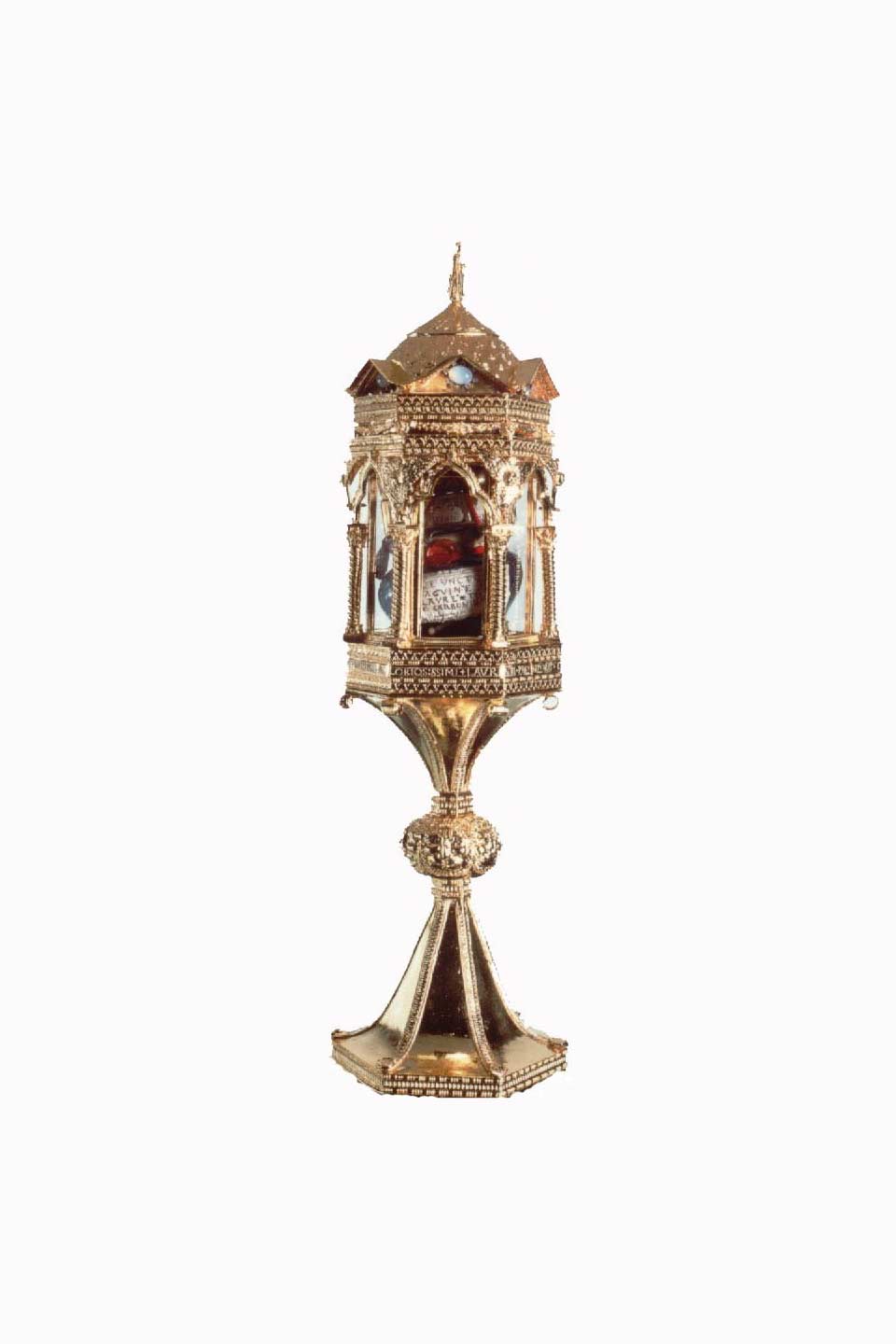
Scopri di piùOri ed ArgentiXVI – XX secolo In questa vetrina, oltre ad un piccolo reliquiario a tempietto in stile gotico realizzato in argento, e corallo sono raccolti diversi oggetti utili allo svolgimento delle funzioni e...
Scopri di piùIl lapidario è stato costituito a seguito di indagini svolte sul colle del Duomo tra il 2008 ed il 2009. In quell’ occasione sono stati individuati i resti di tombe provenienti dalla Cattedrale di San...
Scopri di piùArgento fuso, inciso, cesellato, dorato, dipintoScatola del XIV secolo – Angelo del XV secolo e già riparato nel 1481Anonimo argentiere viterbeseAltezza 60 cm, larghezza 29 cm, larghezza base 38 cm Il reliquiario a...
Scopri di piùQuesto sito utilizza cookie tecnici e di profilazione.
Puoi accettare, rifiutare o personalizzare i cookie premendo i pulsanti desiderati.
Chiudendo questa informativa continuerai senza accettare.
Impostazioni privacy
Questo sito utilizza i cookie per migliorare la tua esperienza di navigazione su questo sito.
Visualizza la Cookie Policy Visualizza l'Informativa Privacy
Google Analytics è un servizio di analisi web fornito da Google Ireland Limited (“Google”). Google utilizza i dati personali raccolti per tracciare ed esaminare l’uso di questo sito web, compilare report sulle sue attività e condividerli con gli altri servizi sviluppati da Google. Google può utilizzare i tuoi dati personali per contestualizzare e personalizzare gli annunci del proprio network pubblicitario. Questa integrazione di Google Analytics rende anonimo il tuo indirizzo IP. I dati inviati vengono collezionati per gli scopi di personalizzazione dell'esperienza e il tracciamento statistico. Trovi maggiori informazioni alla pagina "Ulteriori informazioni sulla modalità di trattamento delle informazioni personali da parte di Google".
Luogo del trattamento: Irlanda - Privacy Policy
Consensi aggiuntivi:
Facebook Remarketing è un servizio di Remarketing e Behavioral Targeting fornito da Facebook Ireland Ltd. Questo servizio è usato per collegare l'attività di questo sito web con il network di advertising Facebook.
Luogo del trattamento: Irlanda - Privacy Policy
Archeoares
We firmly believe that the internet should be available and accessible to anyone, and are committed to providing a website that is accessible to the widest possible audience, regardless of circumstance and ability.
To fulfill this, we aim to adhere as strictly as possible to the World Wide Web Consortium’s (W3C) Web Content Accessibility Guidelines 2.1 (WCAG 2.1) at the AA level. These guidelines explain how to make web content accessible to people with a wide array of disabilities. Complying with those guidelines helps us ensure that the website is accessible to all people: blind people, people with motor impairments, visual impairment, cognitive disabilities, and more.
This website utilizes various technologies that are meant to make it as accessible as possible at all times. We utilize an accessibility interface that allows persons with specific disabilities to adjust the website’s UI (user interface) and design it to their personal needs.
Additionally, the website utilizes an AI-based application that runs in the background and optimizes its accessibility level constantly. This application remediates the website’s HTML, adapts Its functionality and behavior for screen-readers used by the blind users, and for keyboard functions used by individuals with motor impairments.
If you’ve found a malfunction or have ideas for improvement, we’ll be happy to hear from you. You can reach out to the website’s operators by using the following email
Our website implements the ARIA attributes (Accessible Rich Internet Applications) technique, alongside various different behavioral changes, to ensure blind users visiting with screen-readers are able to read, comprehend, and enjoy the website’s functions. As soon as a user with a screen-reader enters your site, they immediately receive a prompt to enter the Screen-Reader Profile so they can browse and operate your site effectively. Here’s how our website covers some of the most important screen-reader requirements, alongside console screenshots of code examples:
Screen-reader optimization: we run a background process that learns the website’s components from top to bottom, to ensure ongoing compliance even when updating the website. In this process, we provide screen-readers with meaningful data using the ARIA set of attributes. For example, we provide accurate form labels; descriptions for actionable icons (social media icons, search icons, cart icons, etc.); validation guidance for form inputs; element roles such as buttons, menus, modal dialogues (popups), and others. Additionally, the background process scans all the website’s images and provides an accurate and meaningful image-object-recognition-based description as an ALT (alternate text) tag for images that are not described. It will also extract texts that are embedded within the image, using an OCR (optical character recognition) technology. To turn on screen-reader adjustments at any time, users need only to press the Alt+1 keyboard combination. Screen-reader users also get automatic announcements to turn the Screen-reader mode on as soon as they enter the website.
These adjustments are compatible with all popular screen readers, including JAWS and NVDA.
Keyboard navigation optimization: The background process also adjusts the website’s HTML, and adds various behaviors using JavaScript code to make the website operable by the keyboard. This includes the ability to navigate the website using the Tab and Shift+Tab keys, operate dropdowns with the arrow keys, close them with Esc, trigger buttons and links using the Enter key, navigate between radio and checkbox elements using the arrow keys, and fill them in with the Spacebar or Enter key.Additionally, keyboard users will find quick-navigation and content-skip menus, available at any time by clicking Alt+1, or as the first elements of the site while navigating with the keyboard. The background process also handles triggered popups by moving the keyboard focus towards them as soon as they appear, and not allow the focus drift outside it.
Users can also use shortcuts such as “M” (menus), “H” (headings), “F” (forms), “B” (buttons), and “G” (graphics) to jump to specific elements.
We aim to support the widest array of browsers and assistive technologies as possible, so our users can choose the best fitting tools for them, with as few limitations as possible. Therefore, we have worked very hard to be able to support all major systems that comprise over 95% of the user market share including Google Chrome, Mozilla Firefox, Apple Safari, Opera and Microsoft Edge, JAWS and NVDA (screen readers).
Despite our very best efforts to allow anybody to adjust the website to their needs. There may still be pages or sections that are not fully accessible, are in the process of becoming accessible, or are lacking an adequate technological solution to make them accessible. Still, we are continually improving our accessibility, adding, updating and improving its options and features, and developing and adopting new technologies. All this is meant to reach the optimal level of accessibility, following technological advancements. For any assistance, please reach out to